Our Projects
Food Forest
Project Lead: Evan Rafuse and Tamara Low
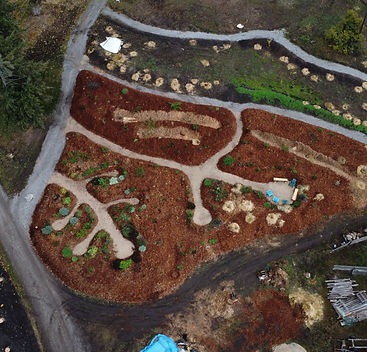
In the Food Forest, hundreds of plants representing over one hundred species can be viewed on a hillside crisscrossed with meandering pathways. When mature, the food forest will offer the community herbs, berries, fruits, and nuts of all kinds, both native and non-native, interspersed with flowers to thrill pollinators and people alike.
The lead organization for this project is the North Okanagan Permaculture Collective (NOPC). Follow them on Facebook for regular updates.
Three Sisters Garden
Project Lead: Brenda Davies and Dawn Guenette
The Three Sisters garden showcases an ancient indigenous growing technique that combines the three complementary plants: corn, beans, and squash. Amongst the ‘sisters’ can be found marigolds, nasturtiums, sunflowers, pumpkins, and amaranth. Schoolchildren are involved in all aspects of this garden project, from working the soil to planting, watering, harvesting, and food preparation.
The lead organization for this project is the North Okanagan Permaculture Collective (NOPC). Follow them on Facebook for regular updates.

Hedgerow
Project Lead: Stefan Jasiura
The hedgerow project is full of hidden gems. As the project matures, you will find permaculture guilds throughout the agricultural park.
Do you recognize a plant you discovered in the food forest? Feel free to sample the food you find.
The lead organization for this project is the North Okanagan Permaculture Collective (NOPC). Follow them on Facebook for regular updates.

Wildlife Enhancement
Project Lead: Richard Stranks
The primary objective of these projects is to reduce crop damage through biological methods rather than insecticides and rodenticides. This environmentally sustainable, approach is cost-effective and minimizes risks to human health and the environment.
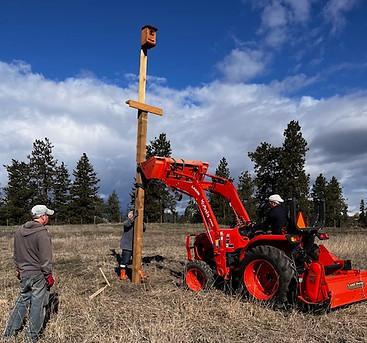
Projects include: Nesting boxes for Kestrels and Barn Owls, 4 Perch Poles, and 2 Bat Houses.
Kestrel Nesting Box - North Field
Kestrels serve as “winged security guards” for farmers by preying on rodents and insects while intimidating common pests such as robins and starlings. They directly improve crop yields safely without the use of rodenticides or pesticides.
4 Perch Poles
Perch poles provide raptors such as hawks, falcons and owls with a vantage point which increases their visibility and hunting range. A high perch allows them to spot prey at a distance, resulting in improved hunting success.
By attracting natural predators, FoSAP can eliminate the need for chemical rodenticides, which can accidentally poison the very birds intended to help.
2 Bat Houses
Bats provide critical ecosystem services that benefit farming through natural pest suppression, pollination and nutrient cycling, thereby reducing the need for chemical pesticides. A single bat can consume up to its own body weight in insects each night, including pests that threaten field crops, orchards and vineyards. Bats feed on numerous agricultural pests, including moths, beetles, leafhoppers and stinkbugs. A small colony can consume hundreds of thousands of these insects over a summer, further reducing the need for chemical pesticides.
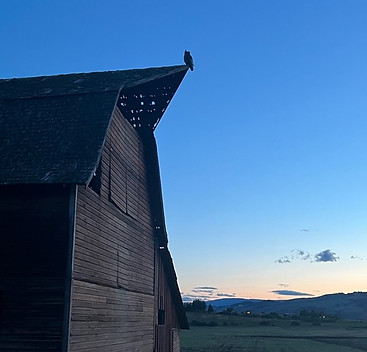
Barn Owl Nesting Box - To be placed in the Barn loft summer 2026
Barn owls’ predatory efficiency reduces the need for costly and harmful chemical rodenticides. A single owl can consume 10–12 rodents daily, and a nesting family can remove up to 3,000 rodents annually. By reducing rodent populations, barn owls prevent crop and root system damage. A family of owls can reduce the rodent population by over 3,000 in a single nesting season.Installing nest boxes is a one-time investment that provides free, year-round pest control. Barn owls are non-territorial and can thrive in agricultural areas. They readily use man-made nesting boxes placed 3–4 metres high in barns or on poles. Barn owls hunt throughout the year and can raise two broods in a single season.

.jpeg)
Wetland Restoration
Project Lead: Carrie Nadeau and Bob Fleming
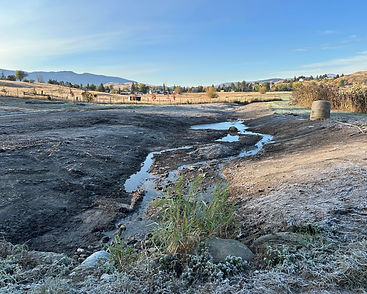
Located within the SAP, the stream and connected wetland area, commonly referred to as “Hog’s Gulch”, underwent a comprehensive restoration project in the fall of 2025.
Restoration objectives focus on:
-
improving stream and wetland function,
-
enhancing water retention,
-
re-establishing riparian zones to increase biodiversity,
-
strengthening overall watershed resiliency.
These efforts will contribute to climate change mitigation, support healthy ecosystems and wildlife, and provide long-term environmental and community benefits, including public engagement and education.
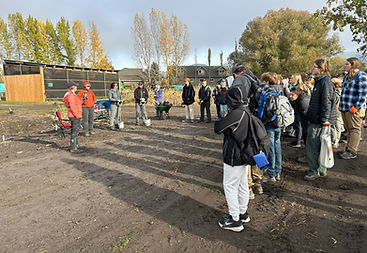
In October 2025, weeds were stripped, and the wetland and creek channel were widened and natural features added to increase water retention and add microsites for native species to establish. Then 53 people volunteered a combined 152 hours to plant vegetation in the riparian area.
In partnership with RDNO, the Okanagan Similkameen Stewardship Society purchased and supplied 352 plants as a donation. Volunteers gathered from the Friends of the sncəcmałqtn Agricultural Park, BX and Swan Lake and Community Association, RDNO, Okanagan Similkameen Stewardship Society, and Fulton’s Awaken Nature Education Program (ANEP) to support the restoration.

Biochar
Project Leads: Dave Derbowka and Eli Pivnick
Biochar is produced through heating wood or other
organic material to a high temperature (700 degrees C) in
a low oxygen environment.
-
Similar to charcoal but is more porous and more stable.
-
Simple and effective method of eliminating woody debris
-
with minimal smoke and carbon emissions.
-
Biochar is an important soil additive that retains moisture and nutrients while providing a home for soil microbes.
-
Biochar is beneficial for any kind of gardening, farming or forestry operations.

Invasives
Project Lead: Kathy Jenkins and Marnie Williamson
Volunteers for this project support our Weedy Wednesdays. Help local K-12 students learn about invasive plants and how to remove a Scotch Thistle plant.

Farm Maintenance
Project Lead: Kim Harvey
Engage in a broad range of items assisting other group projects around the park.
Fencing repairs, signage installation, planting trees, some barn repairs, equipment operating, nest and bat box installations, cleanup… just about anything you can imagine.

Shade Sail Area
Project Lead: Bob Fleming
Ongoing project by the Friends of SAP. Managing sunflowers, tree planting, and turf.

Community Gardens
Project Lead: NexusBC
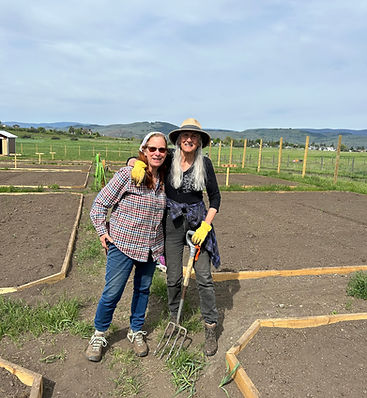
Community gardening is a valuable recreation activity that can contribute to food security, community development, environmental awareness, positive social interaction and community education.
NexusBC Community Resource Centre manages the sncəcmałqtn Community Garden as well as two other community gardens in Vernon containing plots available to members of the community to rent for seasonal use.
There is a waitlist to rent a plot at:
Historic Barn
Project Lead: RDNO
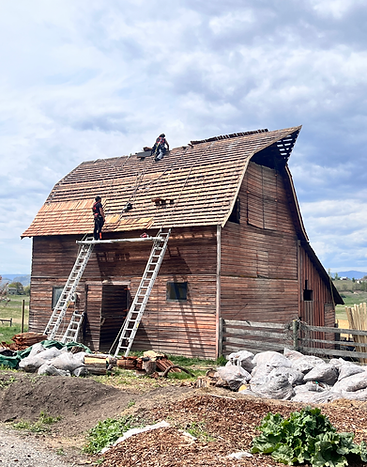
The barn is a complex wood-frame structure constructed in the early 1900’s as part of the historic BX Ranch. It was built in the gambrel "Barn Style” which is characterized by a distinctive double-sloped roof on each side, with a steeper lower slope and a shallower upper slope, designed to maximize loft space for storing hay and equipment. This practical design provides ample storage without significantly increasing the building's footprint.
The barn is one of the last examples of historical barns in the North Okanagan and is tangible reminder and important example of historical agriculture practices in the North Okanagan.
Outdoor Classroom
Gathering Place
Project Lead: RDNO
This project is funded by the Electoral Area B Community Works Fund in the amount of $100,800 and the Electoral Area C Community Works Fund in the amount of $99,200. This gives a total amount of $200,000 for this project.
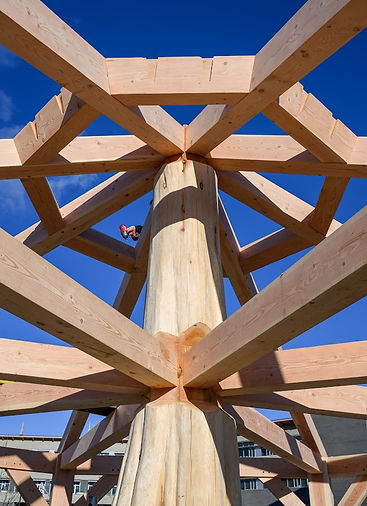
A timber frame outdoor classroom at SAP would provide a dedicated, sheltered space to support hands-on agricultural education and community learning. This structure would enhance programming opportunities related to gardening, food systems, and sustainable practices, while offering a comfortable, weather-protected environment for workshops, school groups, and public events. Its natural design complements the garden setting and reinforces SAP’s role as a hub for local food and environmental education.